
The Lantern Post
Why Your Toddler Won’t Sleep: The Science of Sensory Regulation and the “Odora Method”
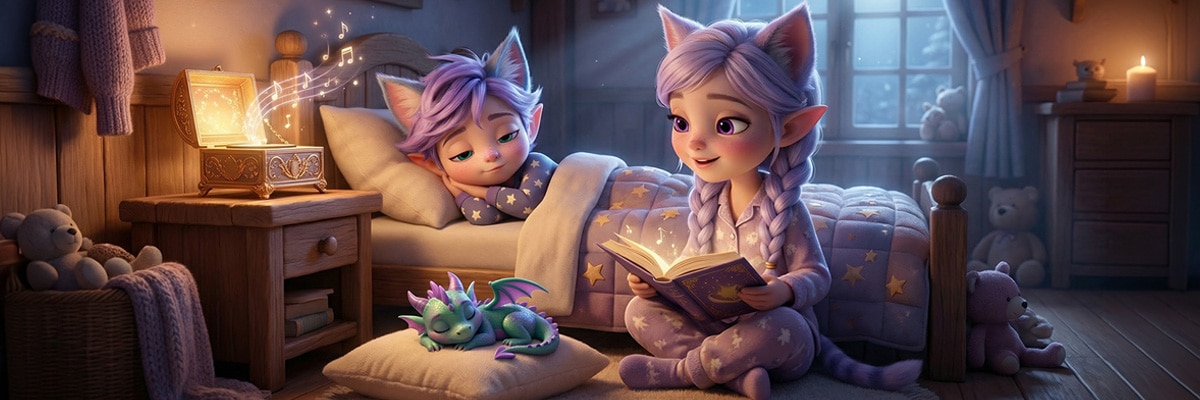
Every parent knows the feeling: the house is quiet, the lights are low, but your child is wide awake, their mind racing with the energy of a thousand suns. You’ve tried every “trick” in the book, yet bedtime remains a struggle.
The truth is, falling asleep is a complex neurobiological transition. At Kittelfdora Kids, we’ve synthesized modern pediatric sleep research with our philosophy of “softness is strength” to create the Odora Method, a science-based approach to help your child find their way to a peaceful night’s rest.
Understanding the “Sensory Sunset”: The Science of Melatonin
Research in pediatric sleep hygiene shows that a child’s brain needs a clear signal to transition from the high-energy exploration of the day to a state of rest.
- The Science: Artificial blue light from screens inhibits melatonin, the hormone responsible for sleep.
- The Odora Tip: Implement a “Sensory Sunset” 60 minutes before bed. Dim the lights to mimic the warm glow of Brindle Fernflicker’s lantern. This signals the pineal gland to start preparing the body for deep sleep.
The Power of Melodic Anchors: Beyond White Noise
White noise is the common tool, but it only masks. A repeating melody, like a music box, does something different: it gives your child something to recognize. That recognition is the part we build our sleep music around.
- The Science: A melody that repeats every night becomes familiar, and familiar sounds are easier for a tired child to settle into than new ones. This is not reducing the “alarm” response in the brain’s amygdala.
- The Odora Method: We use specialized pink noise frequencies and slow-tempo music box arrangements in our Sleep Music collection. By playing these same melodies every night, you create a “Pavlovian response” where your child’s nervous system recognizes the sound as a cue for safety and slumber.
“Emptying the Heart”: Processing Big Feelings
Sometimes, a child can’t sleep because their “emotional cup” is too full. As the wise ( 👉 ) Luma says, “The quieter you are, the more you hear.”
- The Science: Naming emotions (Affect Labeling) moves brain activity from the emotional center to the logical prefrontal cortex, reducing bedtime anxiety.
- The Advice: Spend 5 minutes on a “Heart Listen.” Ask your child what made them feel brave or what made them feel quiet today. This simple ritual processes the day’s “big feelings,” preventing them from turning into night-time restlessness.
Avoiding the “Overtiredness Trap” (Cortisol Spikes)
In the lore of Kittelfdora, ( 👉 ) Twillan Mosswhistle says being lost is an adventure, but in sleep science, a lost routine leads to trouble. When children miss their “sleep window,” their bodies produce cortisol, leading to a “second wind” that makes falling asleep nearly impossible.
-
The Solution: Consistency over complexity. A predictable 10-minute routine, dim lights, a short story with Miri, and a melodic anchor, is far more effective than an inconsistent hour-long process.
A Gift for Your Nightly Journey: The Kittelfdora Sleep Collections
To support your implementation of the Odora Method, we have curated a diverse range of auditory tools designed for every stage of your child’s rest. Whether it’s a quick afternoon nap or an all-night deep sleep, our collections provide the perfect “Sensory Sunset” environment.
✅ Our long-form videos are designed to be ad-break friendly to ensure a continuous sleep cycle.
- All-Night Companions (The Sleepmaker’s Box): Specifically designed for an uninterrupted sleep experience, these 95-minute long-form videos feature slow-paced animations and gentle music box melodies to prevent mid-sleep wake-ups.
- Gentle Whispers (Short Lullabies): Perfect for quick transitions, our “Whispers of Sleep” album: including tracks like “Fluffy Friends are Sleeping”: helps slow down your child’s heart rate in just a few minutes.
- The Sea of Hush: A soothing soundscape collection for children who find peace in the gentle rhythms of nature-inspired melodies
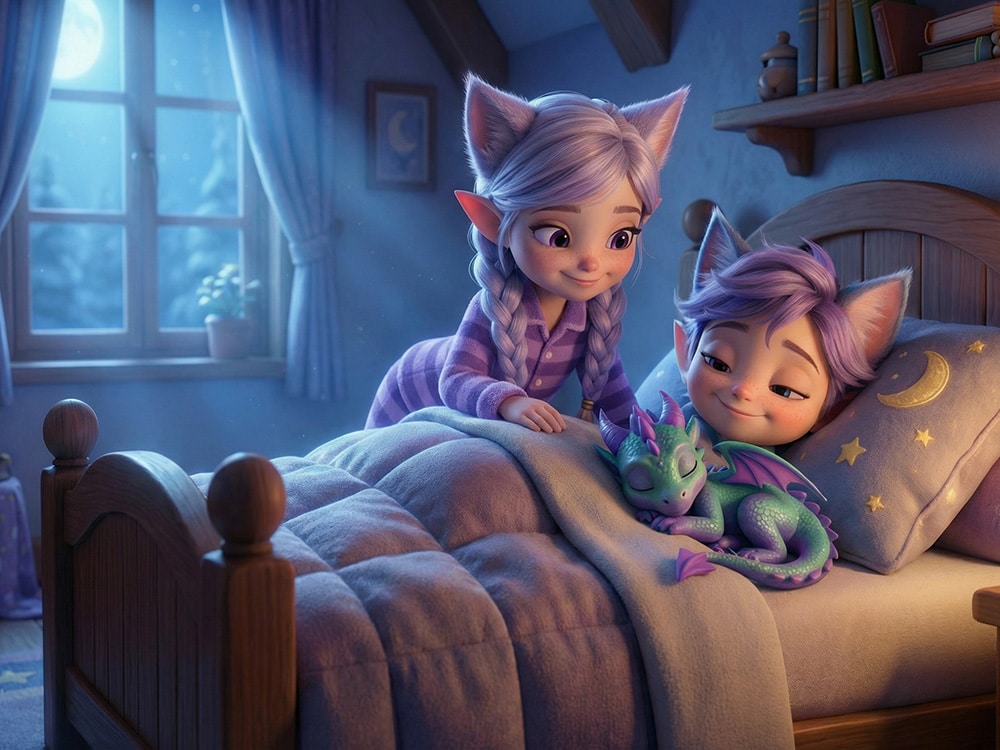
👉🏻 Explore the Full Kittelfdora Sleep Music Collection and find the perfect rhythm for your child’s dreams tonight. 🔊🎶
Understanding the Sound Spectrum: White Noise vs. Pink Noise
To choose the best sleep aid for your child, it’s helpful to understand what’s actually happening in their ears.
- White Noise: Think of this as a “flat” sound that covers all frequencies equally, like the static of an old TV or a loud fan. While it is great for masking sudden noises (like a door slamming), it can sometimes feel “harsh” to sensitive young ears because of its high-pitched energy.
- Pink Noise (The Odora Choice): Pink noise is like white noise’s softer, more balanced cousin. It contains all frequencies, but the higher ones are less intense, creating a deeper, more “natural” sound, similar to steady rain, wind through leaves, or a rhythmic heartbeat.
- Why We Chose Pink Noise: Small studies in adults have linked pink noise to steadier deep sleep, and that is the reason we use it in the Pink Noise (which we use in our Sleepmaker’s Box and Whispers of Sleep collections) is more effective at slowing down brain waves and promoting a stable, deep sleep. It doesn’t just block noise; it creates a “Melodic Anchor” that soothes the nervous system.
FAQ: Science-Based Answers to Toddler Sleep
How can I help my toddler fall asleep faster?
Focus on sensory regulation. Start a “Sensory Sunset” by dimming lights 60 minutes before bed, use low-frequency melodic anchors (like music box sounds), and practice “Affect Labeling” to help your child process their daily emotions.
Is music box music good for baby sleep?
Many families find it settles a child faster than white noise, because a repeating melody is something to recognize rather than something to mask with. For babies under one year, check anything you add to the night with your pediatrician first.
Why does my child fight sleep even when they are tired?
Children often fight sleep due to a phenomenon called “overtiredness,” where the body produces cortisol and adrenaline to keep them going, leading to a “second wind.” This can be prevented by maintaining a consistent daily rhythm and observing early sleep cues, like rubbing eyes or becoming quiet, before the overtiredness cycle begins.
What is the best sound for a child to sleep to?
White noise is good at masking household sounds. Some parents and some small studies find pink noise or a music box gentler and easier to settle to. Which one suits your child is worth testing rather than assuming. These rhythmic patterns mimic the steady environment of the womb, helping to lower the heart rate and stabilize breathing for a more restorative rest.
How can I reduce my child's bedtime anxiety?
Bedtime anxiety often stems from a fear of separation or the dark. Creating a “secure attachment” through a calming ritual, such as sharing a gentle story or a “Heart Listen”, helps children process their daily emotions. Using a soft, warm nightlight and consistent melodic cues can further provide a sense of safety throughout the night.
How long should a toddler's bedtime routine be?
A bedtime routine of roughly 20 to 40 minutes works well for most families. The key is not the length, but the sequence of events. A predictable flow, such as a warm bath, followed by pajamas, and ending with a Kittelfdora Sleep Collection, signals the brain to transition into “rest mode” more efficiently than an irregular schedule.
Does screen time before bed affect a child's sleep quality?
Yes, high-stimulation screens and blue light can inhibit melatonin production, making it harder for children to drift off. If digital tools are used, it is vital to choose “Low-Stimulation” content with slow-paced animations and dim color palettes, specifically designed to support rather than disrupt the natural sleep cycle.
What is the Odora Method for children's sleep?
The Odora Method is a specialized approach to bedtime that blends pediatric sleep science with emotional intelligence. It focuses on three pillars: Sensory Regulation (dimming the environment), Melodic Anchoring (using music box frequencies), and Affect Labeling (processing emotions through storytelling). This method helps transition children from high-energy play to a state of restorative rest.
Are Kittelfdora’s sleep videos safe for overnight play?
Yes. Our Sleepmaker’s Box and Whispers of Sleep collections are intentionally designed as “Low-Stimulation” content. They feature slow-paced, rhythmic animations and gentle decibel levels, and for overnight use we suggest sound only: turn the screen off or face it away once your child is asleep. Light in the room during sleep is not something we recommend, and the same blue-light point we make above still applies at 2am.
Can I use the Odora Method for newborn babies?
The gentle, low-stimulation parts of the routine, dim light and soft sound, suit babies too. But newborn sleep is its own subject. Sleep surface, room sharing, feeding rhythm and sound volume all matter, and safe sleep guidance for babies under one year comes from your pediatrician, not from us. Ask them before you add anything to a newborn's night.
Want to keep reading?
 After-School Restraint Collapse: Why Your Child Falls Apart the Second They See You
 What Pretend Play Is Quietly Teaching Your Child
 Why Outdoor Play Does More for Your Child Than You Think
 Why Boredom Is the Best Thing You Can Give Your Child This Year
 Why Bedtime Routines Matter More Than You Think (And What Science Says You Should Include)
 The Rise of Slow Media for Kids: Why What They Watch Matters More Than How Long
 Do Songs Really Help Kids Learn? The Science Behind Music and Early Literacy
 Classical Music and Children's Brains: What the Research Actually Shows
 The Dark Origins of 8 Classic Nursery Rhymes (And Gentler Versions Your Kids Actually Deserve)
 The Screen Time Question No One’s Really Asking
 Screen Time with a Purpose: How to Turn Watching into Learning 📱💡✨
 Raising Kind Hearts: Why Emotional Intelligence Matters More Than Ever 💖🌍✨
 Meet the Guardians of Kittelfdora: Where Music Meets Meaning
 Why We Built Kittelfdora Kids: A Galaxy of Imagination for Every Child