
The Lantern Post
What Pretend Play Is Quietly Teaching Your Child
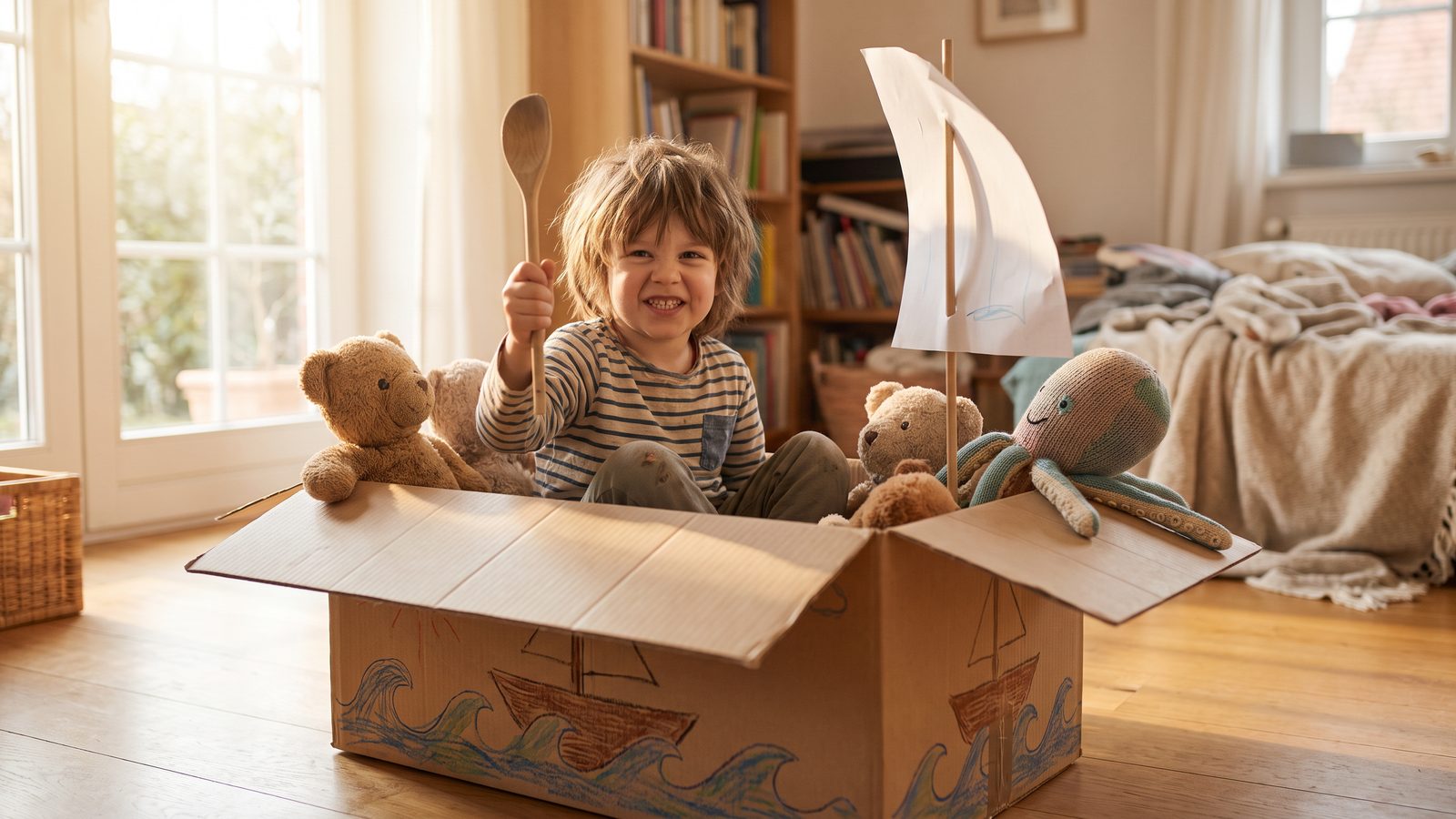
The couch is a boat now. The floor is the sea, and it is full of sharks, and your child is issuing urgent instructions to a crew made entirely of stuffed animals. You have been told, firmly, that you are the baby.
It is easy to watch this and see nothing but a way to fill twenty minutes. But that small, bossy, deeply serious game of make-believe is one of the most mentally demanding things a young child does all day. Underneath the silliness, a lot of quiet work is going on.
Here is what pretend play is actually building in a child, what the research supports, and, just as importantly, what it does not.
The Child Who Is "a Head Taller Than Himself"
Almost a century ago, the psychologist Lev Vygotsky made a claim about pretend play that still shapes how researchers think about it. He said that in play, a child "is always above his average age, above his daily behavior. In play, it is as though he were a head taller than himself."
What did he mean? Watch closely and you can see it. A child pretending to be a doctor holds still for the "examination" far longer than that same child would hold still if you simply asked them to. A child playing "sleeping" lies down and stays down, because the game says so. The pretend rule does something a grown-up's instruction often cannot. It makes a child want to control themselves.
Vygotsky's point was that play is not the opposite of self-control. It is one of the first places self-control is practiced. The imaginary situation comes with invisible rules, and following those rules, freely, because the game is fun, is exactly the skill a child will later need to sit at a desk or wait for a turn.
The Self-Control Hidden Inside "Let's Pretend"
This is not just a nice old theory. Researchers have looked for Vygotsky's idea in real children, and they have found traces of it.
In one careful study, Cynthia Elias and Laura Berk followed a group of three- and four-year-olds across a school year. They watched how much complex, cooperative make-believe each child took part in, the kind where children take on roles and sustain a shared story together. Months later, the children who had done more of this complex sociodramatic play were better at regulating themselves during cleanup, that ordinary daily moment when a child has to stop what they love and do what they have been asked. The pattern held even after the researchers accounted for things like age and vocabulary. Notably, the effect was strongest for the children who had struggled most with self-control to begin with. The play seemed to matter most for the kids who needed it most.
The reason makes sense. Cooperative pretend is a negotiation from start to finish. Who gets to be the mum? No, the baby doesn't drive the car. You have to stay in the shop, you're the shopkeeper. To keep the game alive, each child has to hold the shared story in mind, wait, take turns, and bend their own wishes to fit the group. That is emotional and mental self-regulation, rehearsed over and over, and it feels like fun rather than a lesson.
One well-studied preschool program, Tools of the Mind, built on the Vygotskian approach of Elena Bodrova and Deborah Leong, puts exactly this kind of planned, mature make-believe at the center of the day. Teachers help children plan their play and use one object to stand for another, a wooden block for a phone, a scarf for a river. Children in these classrooms have shown gains in self-control, though researchers are still working out how much of that comes from the pretend play itself and how much from the rest of the program.
Standing in Somebody Else's Shoes
There is another thing happening when a child announces that you are the baby.
To play a role, a child has to imagine being someone they are not. The doctor who is worried. The dog who is hungry. The friend whose feelings got hurt. Slipping in and out of these roles gives children practice at one of the harder social skills there is: understanding that other people have thoughts and feelings different from their own. Psychologists call this theory of mind, and pretend play is one of the settings where it gets a real workout.
Playing out big feelings in a safe, invented frame seems to help too. A child who acts out a scary trip to the doctor, or a monster who turns out to be friendly, is handling a real emotion at a comfortable distance. Elizabeth Thibodeau-Nielsen and her colleagues followed a group of preschoolers for about two years. The children who did more pretend play tended to be stronger later at the mental control behind focusing, holding a rule in mind, and switching between tasks, and that link was clearest in the children who had the hardest time managing their emotions to begin with. A separate 2021 study of hers pointed the same way for pretend play with other children. Why the pretending itself would help is our reading rather than their finding. The pretend frame gives feelings a place to be rehearsed where nothing is actually at stake.
The Honest Part: What We Don't Actually Know
Here is where a lot of parenting articles would tell you that pretend play is essential, that a child who does not do enough of it will fall behind. We are not going to tell you that, because the science does not support it.
In 2013, Angeline Lillard and her colleagues at the University of Virginia published a large review in the journal Psychological Bulletin, looking hard at the claim that pretend play is essential for development. Their conclusion was careful and a little deflating. For a lot of the benefits people confidently assign to pretend play, the evidence was thinner and messier than the headlines suggested. Many studies had weaknesses. Some found effects, some did not.
Their honest read was this. Pretend play is probably one of many good routes to healthy development, not the single essential one. A child who builds, draws, talks, and roams outdoors is likely getting to the same places by other paths. Pretend play helps. It is almost certainly not magic, and it is not a test your child can fail.
The picture has kept filling in since. A 2024 meta-analysis in Educational Psychology Review, pooling many studies, found a real if modest link between pretend play and social competence in early childhood. So the most defensible summary is a calm one. The strongest evidence sits around self-regulation and social skills. Even there, most of the studies compare children rather than follow what happens when play changes, so they show a link and not a cause. The grander claims are best held loosely. And that is genuinely fine. Play does not have to be a brain-training program to be worth every minute.
This matters most for parents of neurodivergent children. Some autistic children, for example, show less spontaneous make-believe, and that is a difference in how a child plays rather than a failure at playing. It is not a verdict on the child, and if you have questions about your child's development, that is a conversation worth having with someone who knows your child. Meet the play your child actually does, rather than the play a checklist expects.
How to Help Pretend Play Grow
You cannot force imagination, and you do not need to. But you can set the table for it.
Give it time and a little boredom
Rich pretend play does not switch on in five minutes. It needs an unhurried stretch of time and, often, a dull moment first. That restless "there's nothing to do" is frequently the doorway. We wrote more about that in our piece on the benefits of boredom for children.
Offer open-ended things, not one-job toys
A toy that does one thing does that thing for the child. A box, a blanket, a set of blocks, a basket of odds and ends, these wait to be told what they are. The more a prop can become anything, the more the child has to imagine, and imagining is the point.
Join in, then hand it back
Being handed a role by your child is an invitation worth taking. Play the baby. But follow their lead rather than taking over the story, and step back out once the game has its own momentum. Your job is to get the engine started, not to drive.
Resist the urge to correct the story
Dogs do not talk, and cars do not fly, and none of that matters here. Inside the game, the child makes the rules, and bending reality is the whole exercise. Let the strange logic stand.
Let older stories feed newer play
Children replay what they take in. A calm, character-rich story often comes back out an hour later as a game, remixed in ways you would never predict. What a child watches and hears becomes raw material for what they invent.
Where Kittelfdora Fits
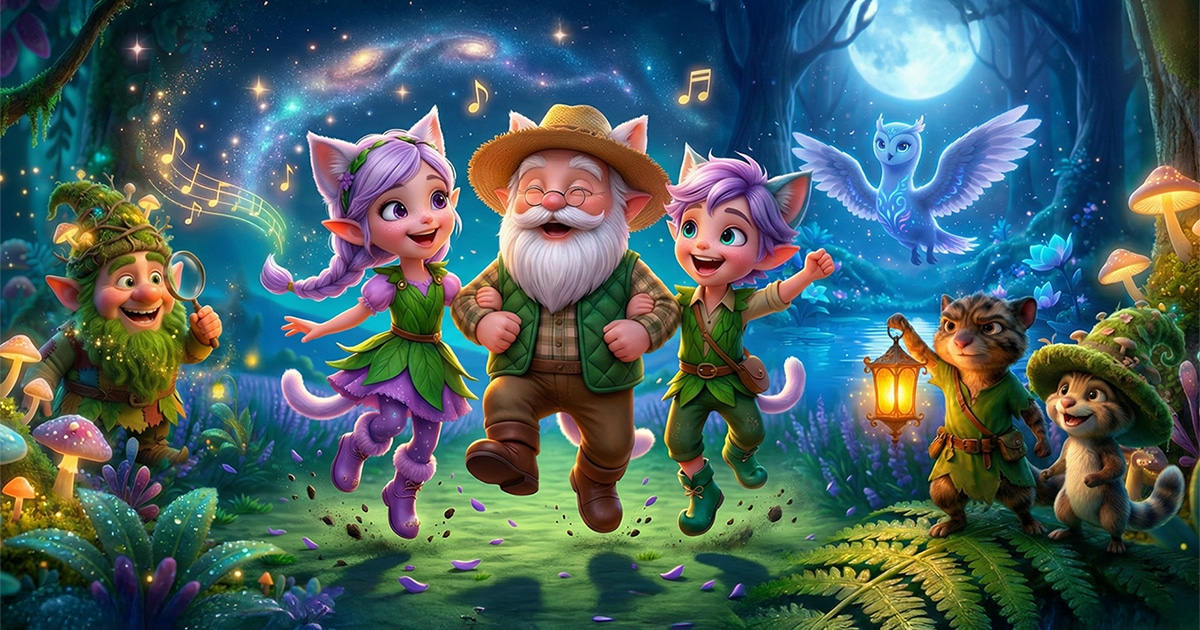
That last point is close to why we make what we make. The whole of Kittelfdora is built to be replayed, not just watched. The slow pace leaves gaps a child's imagination can climb into, and characters like Miri and Ori are drawn to be picked up and carried into a child's own games long after the screen is off.
Our gentle stories are made to become the couch-boat and the stuffed-animal crew, and our Garden of Feelings gives children a soft, playful way to name the emotions they then act out. None of it replaces a child on the floor, deep in a world of their own making. It is meant to be fuel for exactly that.
So the next time you are informed that you are the baby, and the couch has become a boat on a shark-filled sea, you can settle in. Your child is not just passing time. They are quietly rehearsing how to be a person.
Frequently Asked Questions
At what age does pretend play start, and when does it peak?
Simple pretend, like feeding a doll or pretending to sleep, usually appears around 18 months to two years. It grows more elaborate through the preschool years, and cooperative role-play with other children tends to be richest between about three and six. Children carry on pretending well into the early school years, and there is no fixed age where it must stop.
Is pretend play really essential, or can a child develop fine without much of it?
Pretend play is best understood as one of several good routes to healthy development, not the only essential one. A large 2013 review led by Angeline Lillard found the "pretend play is essential" claim overstated, though the evidence for benefits to self-regulation and social skills is reasonably solid. A child who builds, draws, talks, and plays outdoors is getting to similar places by other paths, so there is no need to worry that your child is falling behind.
My child mostly plays pretend alone. Is that a problem?
Solo pretend play is completely normal and valuable. A child narrating a story to their toys is practicing language, planning, and emotional rehearsal, and that is real work. What it does not include is the negotiation that comes with playing alongside someone else. Cooperative play adds social skills on top, so a mix over time is ideal, but there is nothing wrong with a child who often plays make-believe on their own.
Should I join my child's pretend play or leave them to it?
Both have value. Joining in when invited can extend and enrich the play, especially if you follow the child's lead rather than taking charge of the story. But children also need stretches of uninterrupted play they run themselves. A good rhythm is to accept the invitation, help the game get going, then quietly step back and let them carry it.
Do screens and videos hurt or help imaginative play?
The honest answer is that the evidence here is thin, and what there is points more to the kind of pretending than the amount. In one Australian study, children who had just watched action-adventure shows built around toy products invented less pretending of their own, while how much they pretended barely changed. Our own view, and we will flag it as a view rather than a finding, is that slower, character-driven stories leave more room for a child to add something, because children replay and remix what they take in. What a child watches often shows up an hour later as a game of their own.
Want to keep reading?
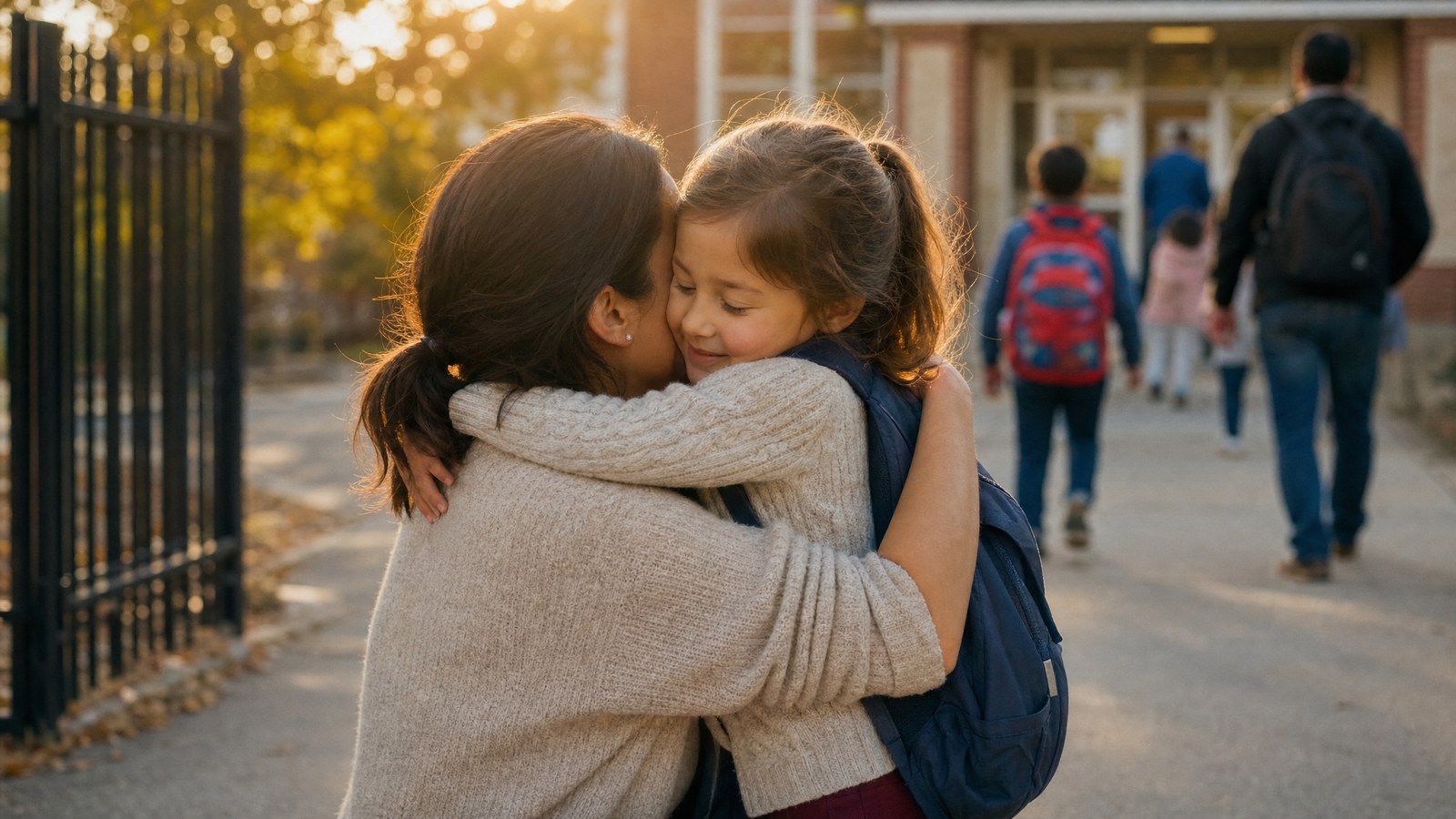 After-School Restraint Collapse: Why Your Child Falls Apart the Second They See You
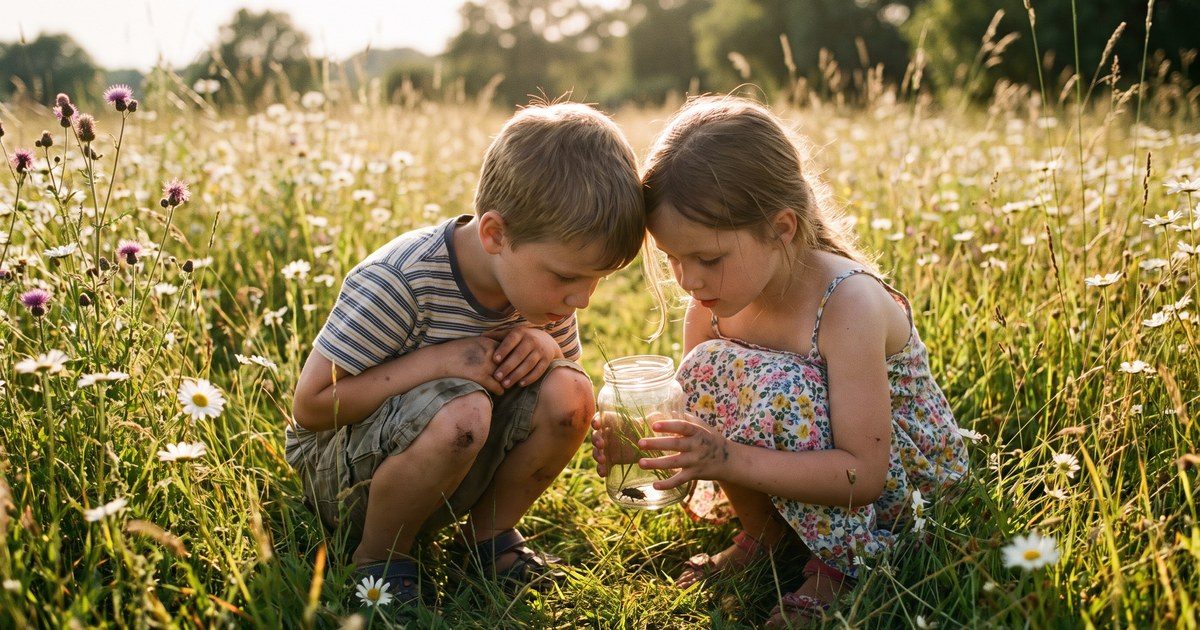 Why Outdoor Play Does More for Your Child Than You Think
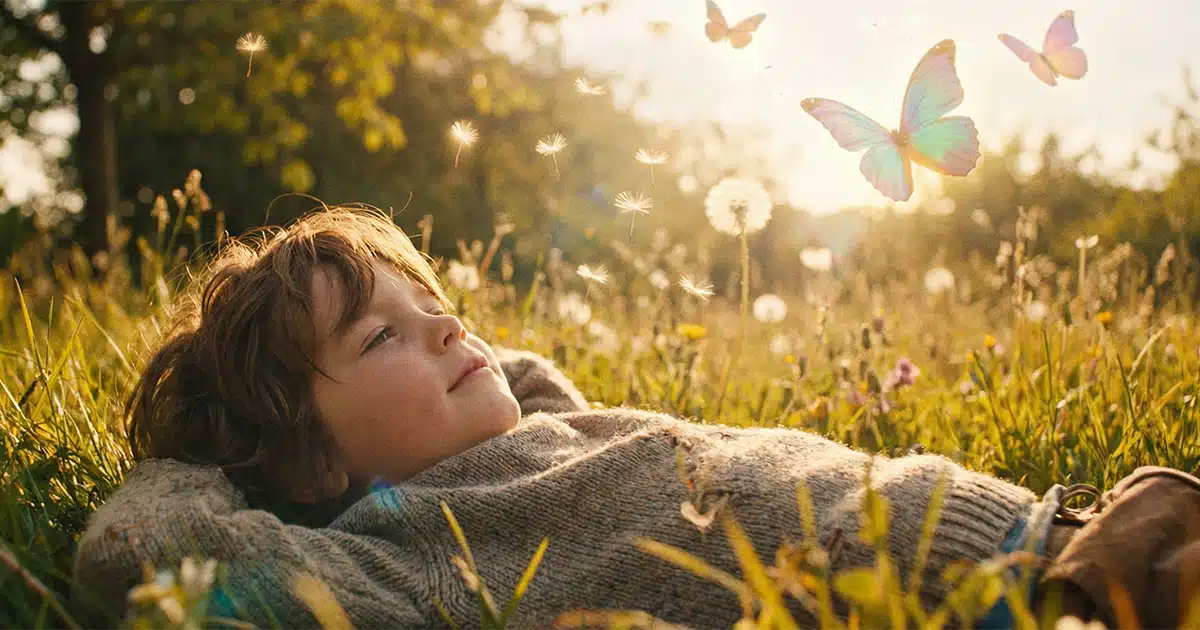 Why Boredom Is the Best Thing You Can Give Your Child This Year
 Why Bedtime Routines Matter More Than You Think (And What Science Says You Should Include)
 The Rise of Slow Media for Kids: Why What They Watch Matters More Than How Long
 Do Songs Really Help Kids Learn? The Science Behind Music and Early Literacy
 Classical Music and Children's Brains: What the Research Actually Shows
 The Dark Origins of 8 Classic Nursery Rhymes (And Gentler Versions Your Kids Actually Deserve)
 The Screen Time Question No One’s Really Asking
 Why Your Toddler Won’t Sleep: The Science of Sensory Regulation and the “Odora Method”
 Screen Time with a Purpose: How to Turn Watching into Learning 📱💡✨
 Raising Kind Hearts: Why Emotional Intelligence Matters More Than Ever 💖🌍✨
 Meet the Guardians of Kittelfdora: Where Music Meets Meaning
 Why We Built Kittelfdora Kids: A Galaxy of Imagination for Every Child